
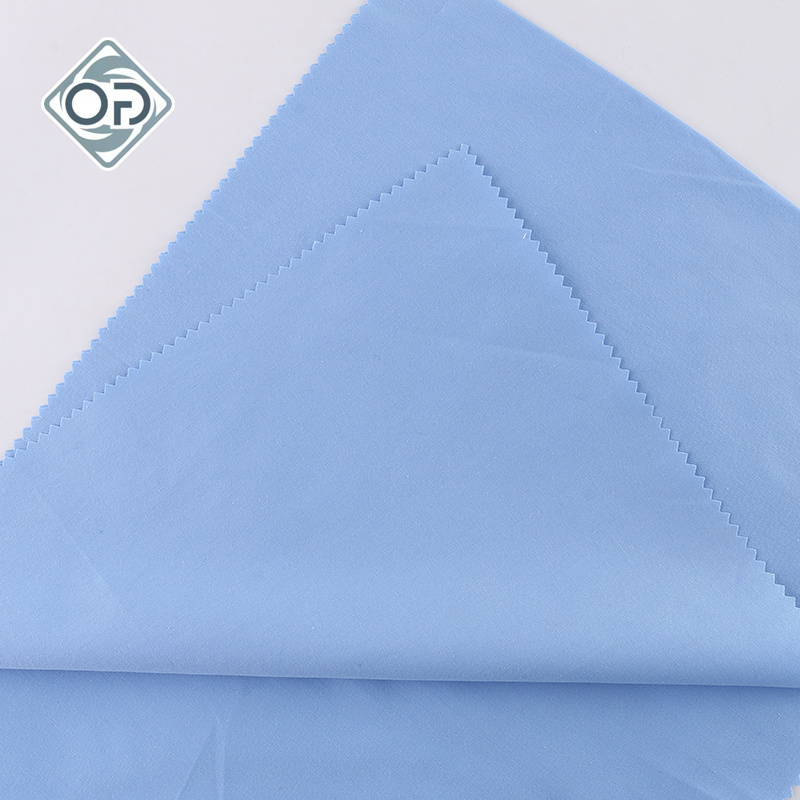
This may be a complicated process of navigating the supply chain of uniform fabrics. One of the most critical decisions required by businesses is whether to deal directly with a manufacturer or request the services of a trader. To arrive at a decision that will influence your product quality, cost structure and supply chain resilience, it is important to understand the underlying distinction between these two entities. As a strict manufacturer, Hebei Ourui Textile Technology Co., Ltd seeks to explain such differences so as to enable you to align yourself with the correct source to your long term requirements.
Control Over Production and Quality Assurance
The greatest distinction comes in the direct control of the production process. In the case of a manufacturer in Hebei Ourui Textile Technology Co., Ltd, the whole process is controlled by a uniform manufacturer and will deal with sourcing raw materials to the finished fabric rolling off the production line. This vertical integration enables quality control at each stage to be carried out stringently. In the production process, quality control is intrinsic and the product is consistent, long lasting and each meter of the fabric is produced to accurate specifications before it is taken out of the manufacturing facility.
On the contrary, a trader normally buys fabric to a variety of manufacturers and stocks it to be sold again. They are mainly involved in the logistics and sales. Although good merchants ensure that they are making quality checks, they do not have a say in the manner in which the fabric was made in the first place. The regularity and composite nature of the cloth are dictated by the mill at which it is made and may change batches to batches depending on whether the trader changes suppliers to achieve a price point.
Cost Structure and Pricing Transparency
The pricing system of a trader and a manufacturer varies significantly. Manufacturers have factory-direct prices. Customers have the opportunity to get a more affordable solution by cutting off middlemen, particularly on bigger and frequent orders. The prices are normally clear and determined by the price of raw materials, complexity of production and the quantity of an order.
However, traders will put a markup to the price they pay to the manufacturer to cover their operations, holding of inventory, as well as profit. This may lead to increased ultimate cost to the buyer. Though the traders may show competitive prices when purchasing in small volume or during spot buying, the absence of transparency may pose the challenge of determining the actual cost breakdown and value offering.
Capability for Customization and Innovation
A manufacturer is the virtual necessity if you need special fabrics special blends, special weaves, special dyes, or special finishes in your project. Hebei Ourui Textile Technology Co., Ltd has invested into research, development and modern machinery to develop customized solutions. It could be coming up with a fabric that is more breathable to use in healthcare uniforms, or a certain shade of blue used in corporate uniforms; the innovation takes place in-house.
The traders usually act on existing stock of standardized products. They are strong in provision of what is easily accessible. Individualization orders of a trader imply that a trader needs to return to his manufacturer, and this introduces communication levels, possible misinterpretation, and slower development, usually at a high price and with longer lead times.
Supply Chain Stability and Long-Term Partnership
Direct cooperation with a manufacturer leads to the establishment of a transparent and stable collaboration. You have an understanding of production capacity, lead times and possible difficulties. This direct communication allows the process of planning to be more effective and the problems to be solved more quickly. In the case of businesses that develop a reputable uniform program, this collaboration will be a stable, constant supply of quality fabric within years to come.
Supply chain of a trader can be less predictable. Their inventory is related to the schedule and availability of the chosen manufacturers. When a supplier that you are dependent on experiences problems, or even goes out of business producing a particular cloth, this indirectly impacts your supply. The interaction is more transactional in nature and is aimed at an individual purchase, as opposed to long-term development.
Making the Strategic Choice for Your Business
Whether to be a manufacturer or a trader is a matter of choice at the end of the day. A trader may be adequate in case you need standardized fabric to do a low volume with minimal specifications project one time. Nevertheless, in the case of businesses that value uniformity of quality, savings related to large-scale purchasing, bespoke design and, crucially, a dependable and sustainable supply chain of their uniform programs having a direct relationship with an established manufacturer is the options choice.
Hebei Ourui Textile Technology Co., Ltd is a professional manufacturer of uniforms, it attempts to offer a product, although it is a partnership, based on trust, innovation, and controlled excellence since the first fiber until the final delivery.